

Overview
SIP Digest Authentication is a security mechanism that verifies access to your SIP endpoint using a username and password.This method uses a secure challenge-response mechanism, meaning the password is not sent in plain text.
Why It’s Needed
Digest Authentication protects your system from:- Unauthorized access
- Fraudulent outbound calls
- Unknown SIP connections
How It Works
SIP Digest Authentication uses a challenge-response mechanism to securely verify credentials.Step-by-step flow
- Client sends initial request (without authentication)
- Server responds with:
401 Unauthorized- a nonce (challenge value)
- Client generates a secure response using:
- SIP Username
- SIP Password
- Server-provided nonce
- Client sends the request again with the computed response
- Server validates the response:
- If valid → access granted
- If invalid → access denied
Important
The password is never sent directly. Instead, a hashed value is calculated using the password and server challenge.
Each authentication request uses a unique nonce, which prevents replay attacks.
Configuration
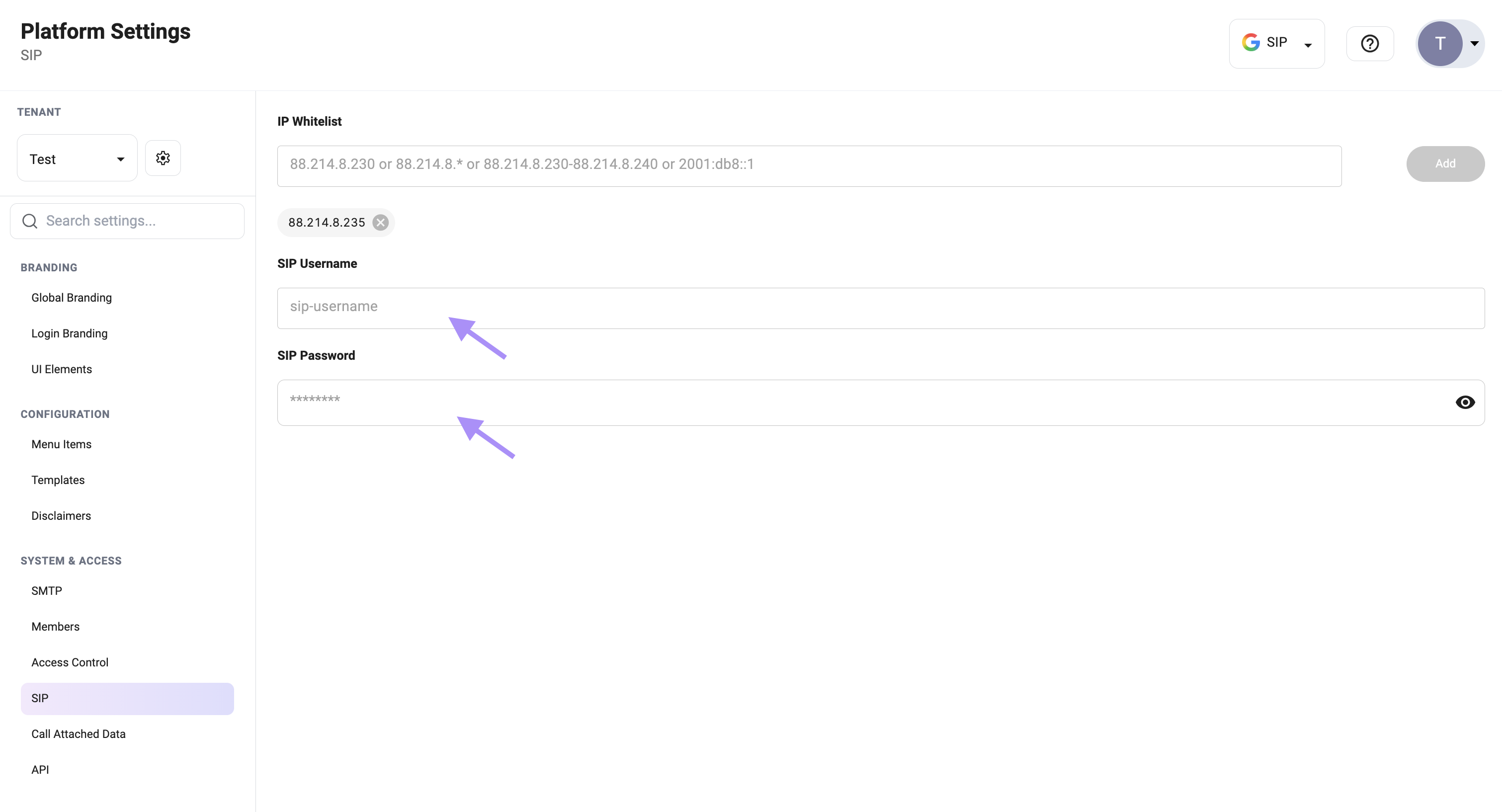
Provide the following credentials:- SIP Username — unique identifier for authentication
- SIP Password — secure password used for verification
When to Use
Use SIP Digest Authentication when:- Your SIP provider requires credential-based authentication
- IP Whitelisting is not available or sufficient
- You need an additional layer of security
Example
Best Practices
Use strong, unique passwords and avoid sharing credentials publicly.
For maximum security, combine Digest Authentication with IP Whitelisting when possible.